The people, physics and patents of the 2025 Nobel prize

No items found.
​
December 9, 2025

The Nobel Prize in physics 2025 was awarded to John Clarke, Michel H. Devoret and John M. Martinis “for the discovery of macroscopic quantum mechanical tunnelling and energy quantisation in an electric circuit” [1]. Their discovery paved the way for the race to achieve a working quantum computer and quantum supremacy – demonstrating a programmable quantum computer can solve a problem infeasible for any classical computer. Thus, the three physicists are rightfully rewarded for showing a phenomenon that provides a significant source of technical innovation today. Interestingly, Clarke, Devoret and Martinis have also been prolific in patenting their findings and technologies and getting on the deep tech patent train, probably before the word was even invented. In the light of the Nobel ceremony, this article will dive into the people, physics and patents of macroscopic quantum tunnelling (MQT).
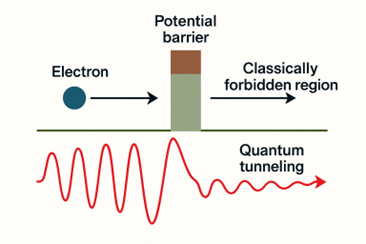
Figure 1: Illustration of an electron tunnelling through a potential barrier. The wave amplitude is smaller outside the barrier, indicating a lower probability of finding the particle there. AI-generated imagery

Bringing quantum tunnelling to the macroscopic scale

Let’s start with an overview of the science. As many of us know, a classical particle in a potential well, for example a golf ball in a cup, will never leave the well unless energy is brought into the system. For the golf ball, this might mean lifting it out of the cup. However, a particle governed by the laws of quantum mechanics may spontaneously leave a potential well without any addition of energy to the system, in a phenomenon called quantum tunnelling. This happens for tiny particles such as electrons and has been a well-known phenomenon for decades. Simplifying somewhat, the probability and strength of quantum tunnelling can be said to be inversely proportional to the size of the system. As illustrated in Figure 1, the probability of the particle existing outside the potential well is smaller, but not zero, and reduces with the size of the system. Once the effect had been demonstrated for the electron, the question became how large a system could become before the probability of quantum tunnelling becomes negligible, and the search for a system exhibiting MQT was inevitable.

Physicists discovered a candidate for MQT in superconducting circuits. One such circuit is called a current biased Josephson junction, illustrated in Figure 2, formed from two superconducting leads (A and B) separated by a potential barrier (C).
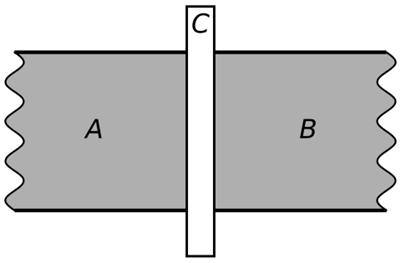
Figure 2: A schematic diagram of a Josephson junction. From [2] under CC-BY SA 3.0.

According to the BCS theory of superconductivity, pairs of electrons may bind together at sufficiently low temperatures, forming what is known as Cooper pairs. The theoretical potential seen by Cooper pairs at C will be of the shape of a tilted washboard as shown in Figure 3. At zero current, the Cooper pair (depicted as a black ball) cannot move. When the bias current over the Josephson junction increases, it may tunnel through the barrier, and no voltage will be seen between A and B. As the current further increases, the potential will be so steep that even a classical particle may “roll” down the potential, and a voltage will be seen between A and B. The current where a voltage can be seen across the junction is called the critical current.
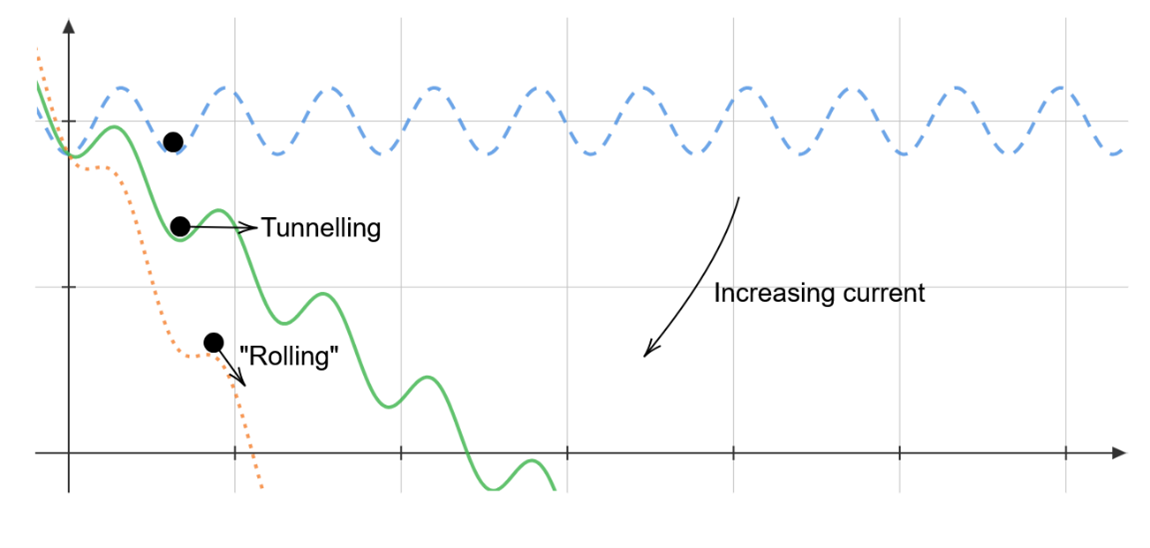
Figure 3: Tilted washboard potentials with increasing current. Own work.

In the beginning of the 1980s, experiments were performed to experimentally verify this behaviour. When the bias current across a Josephson junction was increased gradually, a critical current could indeed be detected. However, there was uncertainty regarding whether this effect was due to disturbances in the circuit, noise or true superconductivity.

When John Clarke was working at the University of California, he formed a group with his doctoral student John Martinis and post-doc Michel Devoret to conduct a series of experiments that finally confirmed, beyond reasonable doubt, that the effect seen in the Josephson junction indeed was MQT. They showed that a circuit “big enough to get one’s grubby fingers on” [1] could be made to exhibit quantum tunnelling. This laid the groundwork for the decades of work on quantum computing and magnetic resonance imaging (MRI) that followed.

A case study of deep tech patents

The three physicists continued working on applications for Josephson junctions, many of which have been patented. A search for patents attributed to at least one of the laureates reveals 53 patent families totalling 434 patents across the world. The most significant portion of the families, 23 of them, are attributed to Martinis and collaborators. Yale University owns 18 families, while 16 are owned by Google and mostly relate to Martinis’ work with quantum computing, and 11 by the University of California. Let’s dive into two of them relating to MRI.

An early patent attributed to Clarke, Martinis and Claude Hilbert, US patent 4585999 A, claims priority in April of 1984. The patent concerns an amplifier based on a superconducting quantum interference device (SQUID) and was owned by the US Department of Energy. The device comprises two Josephson junctions, showing its practical applicability at an early stage. It is mentioned in the patent that the device “would have particular use in nuclear magnetic resonance (NMR) imaging”, also known as MRI.
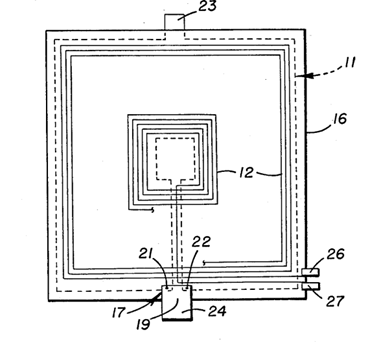
Figure 4: A schematic drawing of a SQUID. From US4585999A

Fast-forwarding a few years, a patent attributed to Clarke and collaborators claiming priority in February 2002, EP1474707B1, indeed concerns “SQUID detected NMR and MRI at ultra low fields”. MRI is normally performed at magnetic field strengths around 1-10 T, while the patent describes NMR using fields in the micro tesla range using a SQUID as a magnetometer, shown as 33 in Figure 5. This is in the same range as the magnetic field of the Earth. Such a device would thus be able to detect the miniscule fields produced by nuclei excited by micro tesla fields while simultaneously distinguishing them from noise and the Earth. Although MRI at ultra low fields is uncommon today, this may create the opportunity to build portable MRI machines in the future, increasing the availability of this ground-breaking technology.
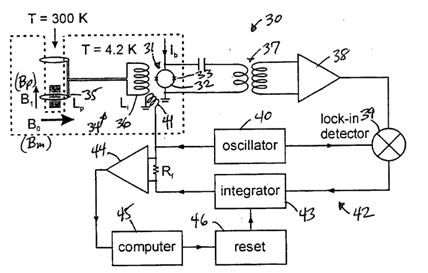
Figure 5: A block diagram of NMR spectroscopy. From EP 1474707B1.

Conclusion

In summary, after demonstrating beyond reasonable doubt that MQT exists, the three physicists went on to develop their techniques into something applicable. These patents show that the laureates of this year’s Nobel prize were on the case of deep tech patents even before the word was invented. Being active and claiming the rights to your inventions remains important today. If you have the opportunity to do so, take the chance. We at EIP, specialising in complex and high-value patents, would be happy to help you.

References

[1] Royal Swedish   Academy of Sciences, “The Nobel Prize in Physics 2025,” 7 October 2025.   [Online]. Available:   https://www.nobelprize.org/uploads/2025/10/press-physicsprize2025-2.pdf.

[2] Wikimedia Commons,   “File: Single josephson junction.svg,” 2 September 2020. [Online].   Available:   https://commons.wikimedia.org/w/index.php?title=File:Single_josephson_junction.svg&oldid=446854302.   [Accessed 27 November 2025].


‍

‍

‍

‍

The Latest Thought Leadership pieces in the Content Hub

No items found.
Stay in the Know

The Patent Strategist

Get expert insights and the top patent stories delivered straight to your inbox.

Heading
This is some text inside of a div block.

Latest Insights

Showing 0 of 100
The UPC After Three Years: From Experiment to Enforcement Forum
15 July 2026
1,282 cases filed at the UPC in three years: infringement actions have surged while revocation filings stayed flat, easing fears the Court would become a European patent graveyard.
Choosing your SEP battleground: UPC, Germany or UK?
07 June 2026
Choosing the right venue for SEP litigation can significantly influence the outcome of FRAND disputes. This article compares the UPC, German and UK courts, examining their approaches to injunctions, FRAND defences, rate-setting and enforcement. It highlights the strategic advantages of each jurisdiction and explains why many SEP owners are increasingly turning to the UK and UPC as part of their European enforcement strategy.
Synthetic Lethality & AI: IP Strategy in Oncology
26 May 2026
This article explores the resurgence of synthetic lethality in precision oncology, highlighting how AI and machine learning are accelerating the discovery of new therapeutic targets. It also examines growing clinical activity, investment, and the evolving intellectual property challenges shaping this emerging field.
Inside the Visser AI Launch Party
20 May 2026
EIP has officially launched Visser AI®, our hybrid intelligence service for patent drafting and prosecution. Watch the launch film from our event at The Boundary in Shoreditch, and discover how our team of European and US patent attorneys — working with the Patently AI platform , delivers faster, lower-cost work at the EPO, USPTO and beyond.
Protecting Your Startup: Five Intellectual Property Mistakes to Avoid
20 May 2026
Early‑stage startups often focus on product development and fundraising, but overlooking intellectual property (IP) can seriously damage long‑term value. This article explores five common IP mistakes startups make, with a particular focus on patents. It covers the risks of filing patents without professional advice, making public disclosures too early, failing to put enforceable contracts in place with third parties, misunderstanding what patent rights actually provide, and neglecting to develop a clear IP strategy. By highlighting these pitfalls and offering practical guidance, the article helps startups protect their innovations, strengthen their commercial position, and improve their prospects with investors.
Technology, Patents, and Sport
13 May 2026
VAR, goal-line tech, AI 3D player avatars, wearable trackers, the technology reshaping the 2026 World Cup and elite sport rests on a patent system that makes the R&D investment behind it worth taking.
Patents or Trade Secrets? When to Patent in Deep Tech Innovation
11 May 2026
Deep tech companies face unique IP challenges due to long development cycles, high upfront investment, and complex technologies that combine products and processes. This article explores when patents, trade secrets, or a combination of both offer the strongest protection. It explains how factors such as detectability, reverse engineering risk, disclosure to third parties, and employee mobility should shape IP strategy decisions. While patents are often best suited to externally visible or licensable technologies, trade secrets can be highly effective for internal processes and know‑how that deliver performance or cost advantages.
Is Your AI Conversation Privileged?
08 May 2026
Recent US court decisions have, for the first time, tested whether conversations with AI tools can be protected by legal privilege. In United States v. Heppner, a court held that documents generated by a defendant using a public AI platform were not protected by attorney‑client privilege, largely because the AI was not used within a lawyer‑directed relationship and the platform’s terms allowed data retention and disclosure. By contrast, in Warner v. Gilbarco, another court found that AI‑assisted materials created by a self‑represented litigant were protected under the work‑product doctrine, which has a more forgiving standard for waiver.
The evolution of nucleic acid sequencing and what it means for Genomics and IP
27 April 2026
This article outlines the evolution of nucleic acid sequencing, from early Sanger methods to next‑generation and long‑read technologies. The journey from deciphering individual DNA strands to sequencing entire genomes in hours represents one of biotechnology's most impressive transformations. The first human genome, completed through the Human Genome Project, took around 13 years to sequence and cost billions of dollars, whereas modern sequencing methods can now deliver a genome in hours for a few hundred dollars. For those interested in patents and life sciences, understanding the technical evolution of sequencing methods offers insights into how fundamental scientific advances translate into valuable patent portfolios.
World IP Day: The big ideas shaping IP's fastest-moving fields
24 April 2026
For World IP Day, we asked experts of EIP’s five growth areas: Uniphy, Ampliphy, Stratiphy, Codiphy and Quantiphy, to share a quick insight on innovation, IP trends, and what excites them about the future. Each responded to a single, focused question reflecting the role their team plays across EIP.
Meet the EIP team heading to INTA 2026 in London
23 April 2026
INTA's Annual Meeting is coming to London. From 2–6 May 2026, the ExCeL will host more than 10,000 trade mark and IP professionals from over 100 jurisdictions — five days of sessions, side events, and the kind of corridor conversations that turn into lasting working relationships.
National offices report increases in national patent applications throughout Europe: Is the EPO no longer “killing” the national offices?
27 March 2026
National patent offices across Europe have reported a marked increase in patent filings in 2025, breaking with a long‑standing downward trend. Data from Germany, France, Italy, Sweden, Austria, Spain and Norway point to growing activity driven by digital technologies, electrification and increased university participation. At the same time, offices report a rise in self‑drafted and AI‑assisted applications, which may lower barriers to entry but also raise concerns about application quality and examination efficiency.
Make your bio(pharma) IP investment ready
22 March 2026
This recap of our LinkedIn Live series focuses on helping (bio)pharma businesses make their IP investment‑ready. Across three sessions, experts will discuss building resilient IP portfolios, making strategic IP decisions ahead of funding rounds, and what the evolving 2026 (bio)pharma landscape means for long‑term IP strategy.
Are professional guidelines making Patent Attorneys too cautious on AI?
19 February 2026
As AI use accelerates in patent practice, many European patent attorneys remain cautious due to professional AI guidelines from the epi. This article argues those guidelines are not a barrier, but a baseline for responsible use.
Beyond CRISPR: Precision to Platform
23 January 2026
Gene editing is entering a new phase, moving beyond CRISPR-Cas9’s breakthrough but costly, bespoke therapies toward more precise and scalable platforms. While CRISPR-based treatments like Casgevy have proven clinical success, they remain expensive and entangled in ongoing patent disputes over foundational IP. Next-generation tools such as base editing and prime editing avoid double-strand DNA breaks, enabling more accurate corrections and broader therapeutic potential. The field’s focus is now shifting to disease-agnostic platforms that can be adapted across many conditions, improving access and efficiency.