AGFA fails in its infringement claim against Gucci

- Toc Heading
- Toc Heading
AGFA NV v Gucci (various entities) UPC_CFI_278/2023
Decision of 30 April 2025 (ORD_598576/2023)[1]
This Decision from the Hamburg LD concerns AGFA's patent EP3388490, which relates to decorating natural leather by applying a base coat "containing a pigment for providing an achromatic colour different from black", and then inkjet printing a colour image on the base coat. We wrote about the patent previously,[2] but at the time it was not clear what was the alleged infringement.
The accused products are items in the "Pikarar Collection", a limited-edition collection designed by Gucci in collaboration with the US-based illustrator Angela Nguyen, examples of which are shown below:
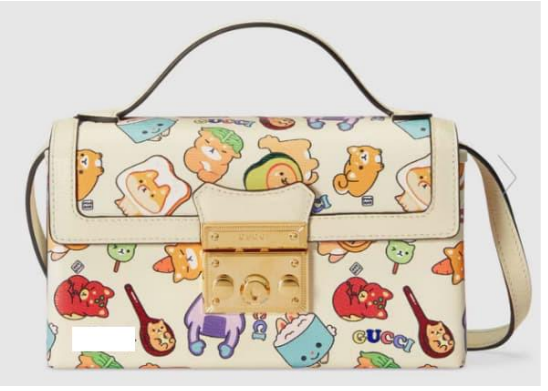
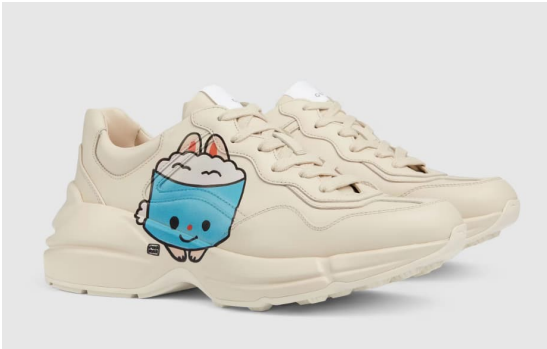
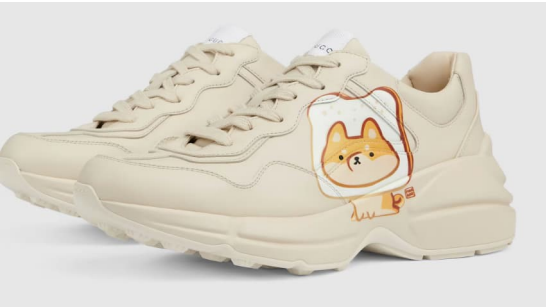
On infringement, a key issue was the scope of the phrase "achromatic colour different from black", in view of the fact that the accused products are of an ivory background colour, as can be seen.
The Court noted that this feature had been narrowed during prosecution to delete the possibility of "a chromatic colour", and that the description stated that "white, grey, and black are achromatic colours, as they have no dominant hue, meaning that all wavelengths are present in approximately equal amounts within those colours". Therefore, the Court held that "the patent defines achromatic colours as colours that have no dominant hue, meaning that all wavelengths are present in approximately equal amounts within those colours. Achromatic and chromatic colours are mutually exclusive as chromatic colours have a dominant hue, i.e. one particular wavelength predominates. Black, though being considered achromatic, is explicitly excluded in the wording of the feature."
The next question arising is the significance of "approximately" in the passage from the description quoted. The Court considered that the import of "approximately" was that "a colour can be achromatic within the scope of the patent if the spectral response was not perfectly flat, but if the deviations from the perfectly flat spectrum were such that the difference between the colour in question and the reference achromatic colour – white or grey – with a perfectly flat spectrum line was not perceptible to the average observer." The Court rejected a technical measurement "ΔE94" as being relevant in this regard.
Based on this understanding of the claim term, the Court decided that the patent claim does not extend to an ivory base coat, as in the accused products. While there was admittedly present in the description a statement that the base coat could be "an off-white or a pale clay colour", it was considered that this was a "chromatic colour" that had been deleted from the scope of the claim during examination in order to distinguish from the prior art. The Court noted that a number of passages in the description, including Example 3, were inconsistent with the granted claims and should have been deleted. Therefore, as is noted in the headnote of the decision:
The definition of claimed features based on the principle that a patent may be used as its "own lexicon" is limited to those parts of the description that are related to the feature in question.
Specifications in the description that are not consistent with the granted claims cannot serve as a basis of a broad interpretation of a claim.
The court stated that observing that the claim had been amended during prosecution did not amount to taking all aspects of the prosecution history into account, seemingly leaving it open as to the extent that the wider prosecution history would be relevant to the issue of claim interpretation.
Overall therefore the Court concluded that the infringement action must fail because the attacked embodiments do not make use of all features of claim 1, as their base coats are not achromatic. While the Court considered extensive technical information in the form of spectral response graphs and chromaticity (C*) measurements, and asserted that the approximate equal presence of all wavelengths cannot be decided by simply looking at the colour of the attacked embodiments, but requires the spectral response to be assessed, the technical analysis appears no more than to confirm the visual impression that the colour is ivory and not white. Other features of the claim were considered but in less detail, since the colour of the base coat was decisive.
The defendants counterclaimed for invalidity of the patent. The Court held as in initial matter that at the UPC a revocation counterclaim is not limited to the claims asserted in the infringement action (as AGFA had contended).
On the substance of the revocation counterclaim, the Court found the claims to be novel and involve an inventive step having regard to all the written prior art cited. In addition, an allegation of invalidity over prior use relating to products of the "Flora" line sold by the defendants was rejected. The Flora products were held to be not novelty destroying as they also had an ivory colour. An inventive step attack based on the Flora products that was developed at the hearing was rejected as not having been set out in the written procedure. Since the Court found the patent as granted to be valid, the auxiliary requests were not considered.
Accordingly, both the infringement action and the revocation counterclaim were dismissed.
[1] https://www.unified-patent-court.org/en/node/116262
[2] https://eip.com/uk/latest/article/agfa_v_gucci_at_the_upc/