The UPC two years on: Withdrawals of actions becoming prominent

The Unified Patent Court has now been running for two years. To mark the occasion, we have looked at the cases and the decisions over the past two years, and share our thoughts on the current state of play.
Statistics of Cases
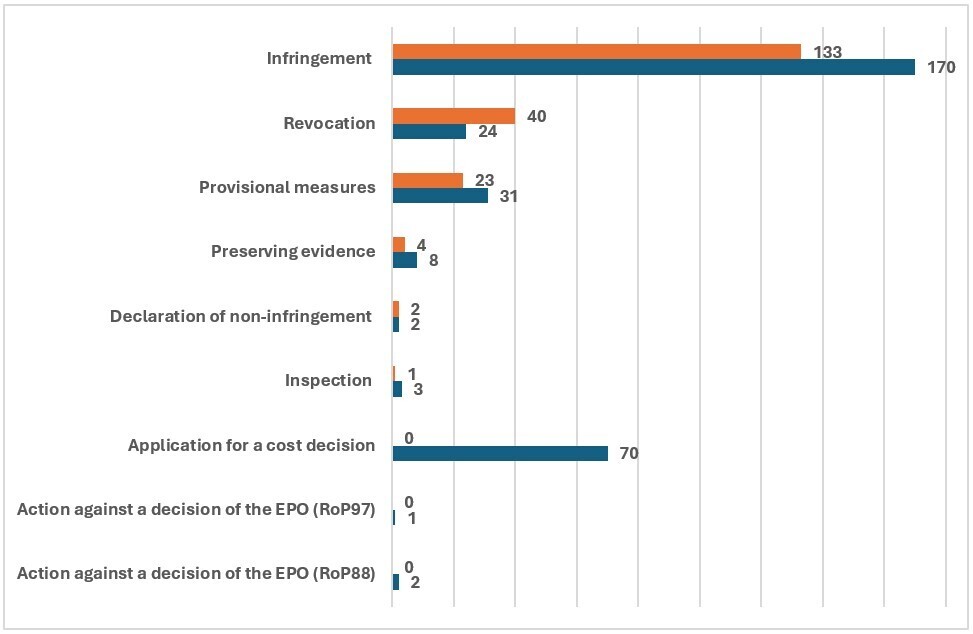
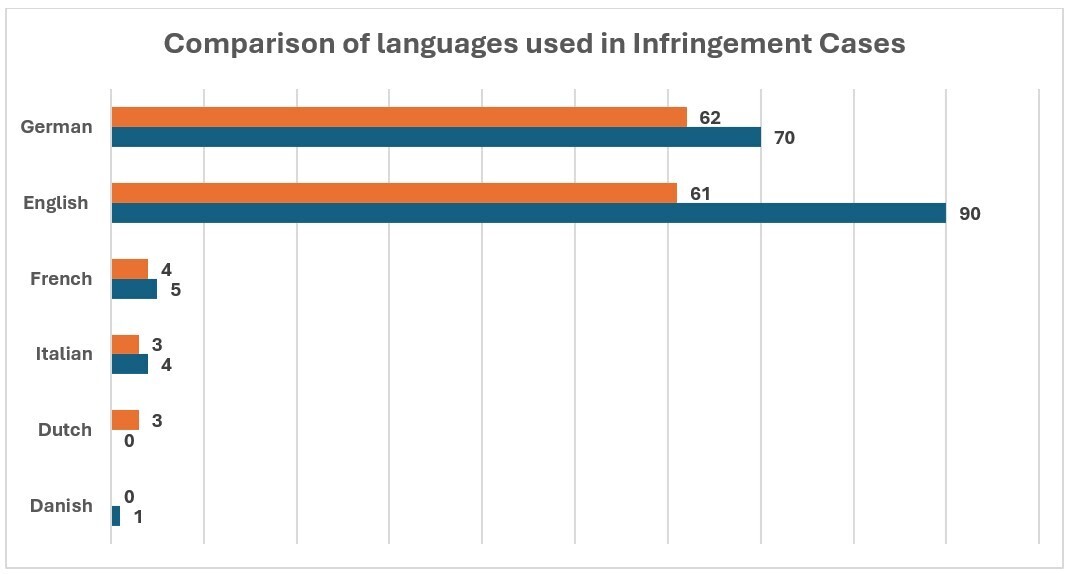
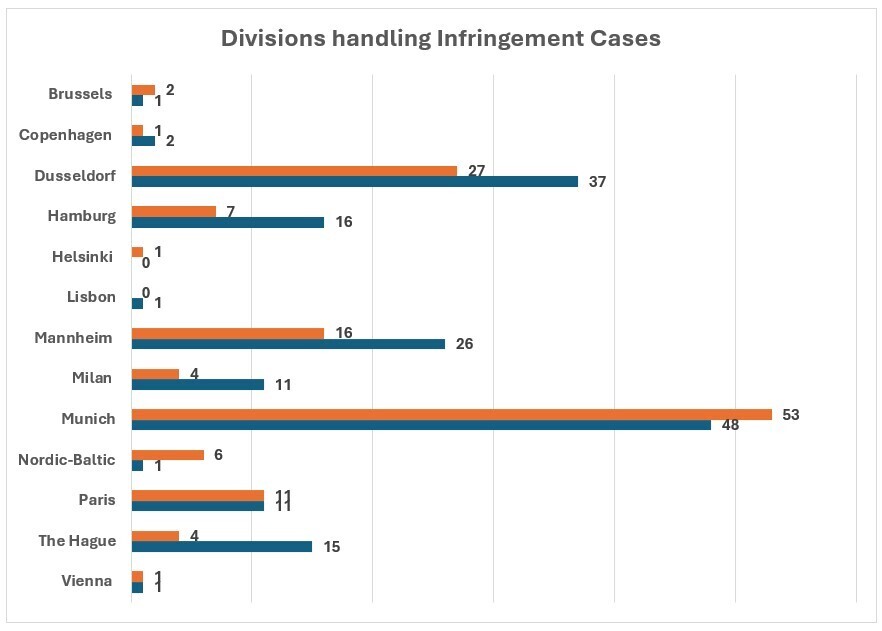
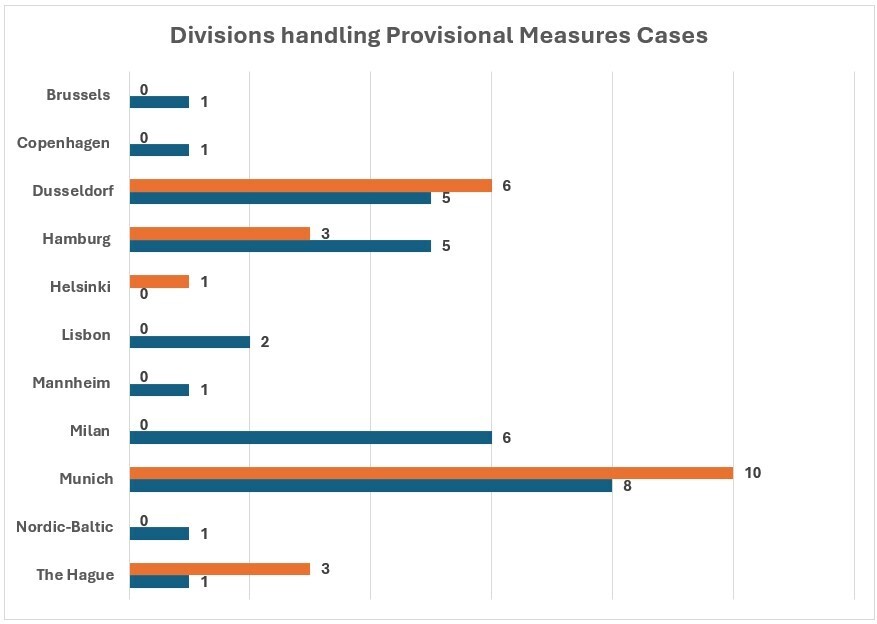
The tables below show the number of actions of each type filed in Year 1 and Year 2 of operation of the UPC, the language in which infringement actions were filed and the local/regional divisions that infringement actions and provisional measures cases were filed in.
In the charts below, the orange bar represents cases filed from 1 June 2023 to 31 May 2024 (the first year of operation of the UPC), while the blue bar represents cases filed from 1 June 2024 to 31 May 2025 (the second year of operation of the UPC).
Filed cases
Language of infringement cases only
Divisions for infringement cases only
Divisions for provisional measures cases only
Key takeaways
It can be seen that the UPC has become if anything more popular, with more actions in Year 2 than Year 1 in respect of infringement cases, provisional measures, and preserving evidence. Slightly strangely perhaps, the number of standalone revocation actions has decreased, suggesting that the UPC will not become a major forum for challenging patent validity. For comparison, around 3000 oppositions are filed each year at the EPO, so the UPC revocations (40 in the first year and 24 in the second) are a tiny number in comparison.
It is also noticeable that English is becoming the predominant language of the UPC, well ahead of German even for infringement actions. Languages other than English and German are employed only very rarely.
Withdrawals
What has really become prominent in the last six months is the number of UPC cases that have settled. Settlements or withdrawal of an action before a final decision are a feature of any litigation system, and are usually encouraged. The UPC is no exception. An arbitration and mediation system was built into the legislation from the outset in Article 35(1) UPCA. It is not yet up and running, but this is expected early in 2026.
In the UPC Rules of Procedure, Rule 265 provides for withdrawal of an action; if this relates to a settlement, then the procedure of Rule 365 can be used whereby the Court confirms the settlement, but this has been employed less often. In either case, the claimant is entitled a partial refund of court fees, depending on the stage to which the proceedings have advanced.
Reviewing the Orders issued by the UPC, withdrawals and settlements became prominent from around December 2024, reflecting that settlements generally occur some time through the proceedings. If the dispute was able to be settled at the outset, the lawsuit would likely not have been filed.
The Orders issued by the UPC, withdrawals and settlements
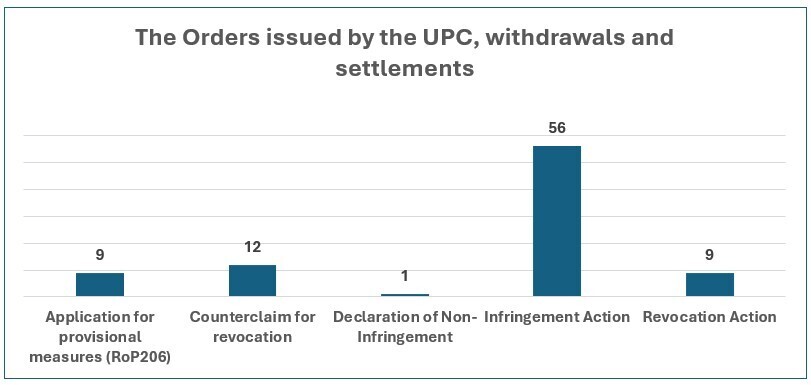
A single UPC case frequently gives rise to multiple orders relating to its withdrawal, so determining the number of withdrawn cases to compare against the number cases is rather tricky. However, we estimate that there have been around 56 withdrawn infringement cases, against a total number of infringement cases filed so far of 303, suggesting a lower floor of withdrawal rates of around 18%. The proportion number will rise as some recently filed cases will likely settle later in the procedure.