Research underlying Nobel prize in chemistry has sparked innovation and patent filings
​
December 2, 2025

Imagine a material that can capture water vapour from desert air during the night and then release water when the sun rises – this sounds like science fiction but has become a reality by the research made by Susumu Kitagawa, Richard Robson and Omar M. Yaghi, awarded the Nobel prize in Chemistry 2025.

This year’s laureates have created a new type of molecular entities, metal-organic frameworks, MOFs, with enormous potential. Besides water harvesting, future application areas include e.g. gas storage, water purification, carbon dioxide capture, and battery technology. The number of patent publications relating to MOFs has risen from close to zero in 2005 to near 4,000 in 2024.

MOFs – soon a term on everyone’s lips

Metal-organic frameworks, MOFs, are materials in which metal ions (or clusters) are connected by organic linkers to create a 3D network containing a vast number of well-defined cavities. The cavities can act as reservoirs for guest molecules that can enter and exit from the surrounding environment. The seemingly endless combinations of the building blocks (metal and linker) allow precise tailoring of MOF properties, such as cavity size and chemical functionality, to suit specific applications.
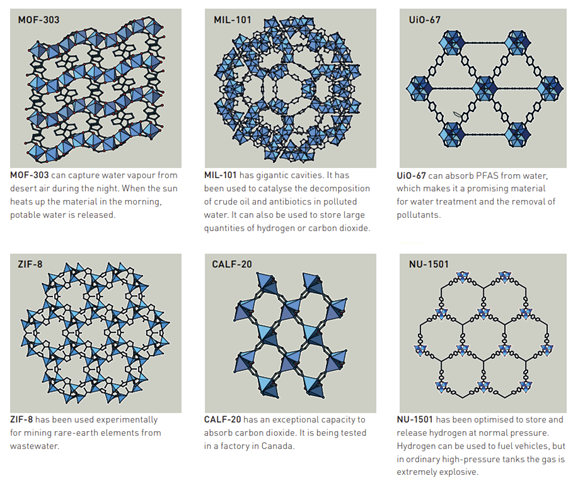
Source: © Johan Jarnestad/The Royal Swedish Academy of Sciences

MOFs are highly porous materials with exceptionally large internal surface areas. One gram of a MOF could have an internal surface area as big as a football field! This makes MOFs better adsorbents than previously known porous materials, such as zeolites or activated carbon.

MOFs are innovation drivers

The MOF technology has paved the way for a flood of innovations in various industrial sectors, such as e.g., chemical industry, healthcare & pharmaceuticals, energy, and environmental remediation.

The vast innovative activity is mirrored by the steep increase in patent filings in the MOF field. China shows the highest patent filing activity, followed by the US and South Korea. A large part of the patent application filings stem from universities, but also major companies like BASF and ExxonMobile can be found among the top filers.
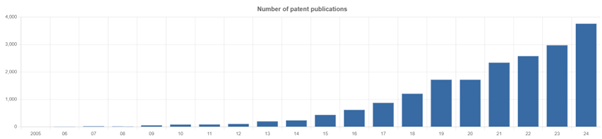
Credit: CAS Content Collection (Michael McCoy Chemical & Engineering News, May27, 2025: “Eye on Patents: Powering EVs and capturing CO2 with metal-organic frameworks”)

Laureates are patent-conscious

Considering the steep rise of patent applications relating to MOFs, it is evident that this field attracts a lot of interest, both in academia and industry. The Nobel laureates themselves also have their research work protected by several patents.

Omar M. Yaghi (together with fellow inventors) has a patent relating to a moisture harvester containing a MOF as water capturing material. This allows liquid water to be collected, also from dry air, e.g. in desert environments. The collected water is suitable for human consumption and can also be used for irrigation of crops. It is easy to envision the impact this invention may have for populations in areas where water supply is scarce.
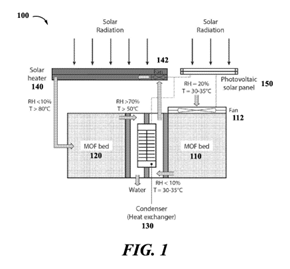
(Figure 1 from EP 3837399 B1 – representative patent family member)

Susumu Kitagawa (and fellow inventors) holds a patent relating to a method for separating and storing highly unstable per- and polyfluoroalkyl substances (PFAS), such as tetrafluorethylene, through adsorption to a MOF. PFAS are widely used industrially, and the possibility to separate, store and transport these toxic and hazardous molecules in a safe way is of great value for humans and the environment.
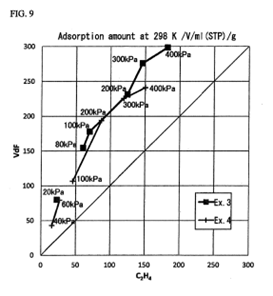
(Figure 9 from EP 3339281 B1 – representative patent family member)

The future is bright

The MOF science is still new, and the broad use and application of MOFs in an industrial scale are yet to be explored. In times of climate change and sustainability challenges, they at least bring a fair amount of hope and expectations to the table.  

The scientific community is excited that the basic research behind MOFs is being awarded the Nobel prize, and Susumu Kitagawa, Richard Robson and Omar M. Yaghi have surely inspired to continued ground-breaking research and innovation. Who would not want to join the solemn Nobel prize ceremony and dinner in beautiful Stockholm?

‍

The Latest Thought Leadership pieces in the Content Hub

The people, physics and patents of the 2025 Nobel prize
December 9, 2025
The 2025 Nobel Prize in Physics recognised John Clarke, Michel H. Devoret, and John M. Martinis for proving macroscopic quantum tunnelling in electric circuits, a breakthrough that enabled quantum computing. Their pioneering research led to hundreds of patents, including innovations in MRI and quantum technology, highlighting the real-world impact of their discoveries.
Stay in the Know

The Patent Strategist

Get expert insights and the top patent stories delivered straight to your inbox.

Heading
This is some text inside of a div block.

Latest Insights

Showing 0 of 100
What are the options if you want to be able to use the UPC?
03 November 2022
All unitary patents fall within the competence of the Unified Patent Court (UPC). Additionally, classical validations of European Patents in states which have ratified the UPC agreement are within...
#
Patenting
​
What is the Unified Patent Court?
01 November 2022
The Unified Patent Court ("UPC") is a new pan-European court which opened for business on 1 June 2023. It adjudicates disputes relating to the new Unitary Patents and also to existing and future...
#
Litigation
​
What is the Unitary Patent and how do I get one?
01 November 2022
The Unitary Patent (UP) is a single patent right, obtained via the European Patent Office, covering all EU Member States which have ratified the agreement at the patent grant date, and is subject to...
#
Patenting
​
How does the opt-out work?
01 November 2022
The Unified Patent Court (UPC) will ultimately be responsible for all litigation in participating member states relating to patents granted by the European Patent Office (EPO); national courts in...
#
Patenting
​
What languages does the UPC use?
01 November 2022
Central Division Proceedings at the central division are in the language in which the patent was granted (i.e., either French, German or English).
#
Patenting
​
IP considerations arising from increased micro mobility competition
24 June 2022
Following the Queen's Speech, and years of consultations and lobbying from the micro mobility sector, it looks like the e-scooter industry is in for a bumper year.
#
Patenting
​
Are open-source patent portfolios the key to the EV revolution?
16 June 2022
The widespread rollout of electric vehicles is viewed as a crucial part of the UK's green revolution. When discussing how this can be achieved, charging infrastructure is often cited as the key to...
#
Patenting
​
What is the likely timing of the UPC and UP coming into being?
09 June 2022
The Unified Patent Court (UPC) is currently completing preparations to be open for business (under the Protocol on the Provisional Application of the UPC Agreement (the ‘PAP-Protocol')).
#
Litigation
​
The Unitary Patent System is on the way
20 January 2022
We reported last year that the Unitary Patent and Unified Patent Court (UPC) were progressing. The main hurdle left to clear was sufficient countries ratifying the Protocol on the Provisional...
#
Litigation
​
Hybrid event: Healthcare Innovation & Strategy Series - IP Strategy Beyond Drafting Patents
19 October 2021
We would like to invite you to join us for the second part of our life science and medtech event on 09 November where we will continue to explore upcoming trends in IP and healthcare.
#
Patenting
​
Unlocking healthcare with AI
16 September 2021
Much has been written about the development of artificial intelligence (AI) and its potential to reshape everyday life.This potential is already being realised in healthcare, with health...
#
Patenting
​
License to heal
07 September 2021
The hallmark of 5G is extremely low latency speeds. In theory, robotics could be controlled from long distances with just 0.1 seconds of a delay.
#
Patenting
​
Ask the Experts: What can I do if someone is using my invention without my permission?
02 September 2021
In the previous articles, we looked at the mechanics of filing a patent application. In this last article of our ‘Ask the Experts' series, we will be addressing some of the other ways in which a...
#
Patenting
​
The personalised healthcare boom
01 September 2021
Personalised healthcare is a fairly new term relating to technology that gives individuals effective healthcare based on their own unique attributes.
#
Patenting
​
Ask the Experts: How can I manage the costs of a patent?
24 August 2021
In previous articles, we addressed the questions of whether applying for a patent is appropriate, and if so, when this should be done. This article addresses questions around the process for filing a...
#
Patenting
​