Research underlying Nobel prize in chemistry has sparked innovation and patent filings

​
December 2, 2025

Imagine a material that can capture water vapour from desert air during the night and then release water when the sun rises – this sounds like science fiction but has become a reality by the research made by Susumu Kitagawa, Richard Robson and Omar M. Yaghi, awarded the Nobel prize in Chemistry 2025.

This year’s laureates have created a new type of molecular entities, metal-organic frameworks, MOFs, with enormous potential. Besides water harvesting, future application areas include e.g. gas storage, water purification, carbon dioxide capture, and battery technology. The number of patent publications relating to MOFs has risen from close to zero in 2005 to near 4,000 in 2024.

MOFs – soon a term on everyone’s lips

Metal-organic frameworks, MOFs, are materials in which metal ions (or clusters) are connected by organic linkers to create a 3D network containing a vast number of well-defined cavities. The cavities can act as reservoirs for guest molecules that can enter and exit from the surrounding environment. The seemingly endless combinations of the building blocks (metal and linker) allow precise tailoring of MOF properties, such as cavity size and chemical functionality, to suit specific applications.
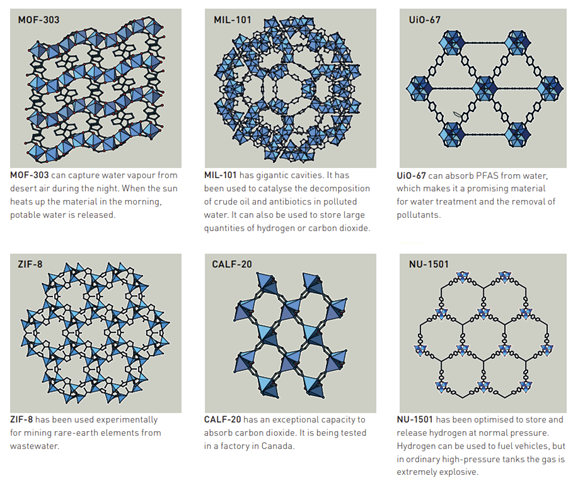
Source: © Johan Jarnestad/The Royal Swedish Academy of Sciences

MOFs are highly porous materials with exceptionally large internal surface areas. One gram of a MOF could have an internal surface area as big as a football field! This makes MOFs better adsorbents than previously known porous materials, such as zeolites or activated carbon.

MOFs are innovation drivers

The MOF technology has paved the way for a flood of innovations in various industrial sectors, such as e.g., chemical industry, healthcare & pharmaceuticals, energy, and environmental remediation.

The vast innovative activity is mirrored by the steep increase in patent filings in the MOF field. China shows the highest patent filing activity, followed by the US and South Korea. A large part of the patent application filings stem from universities, but also major companies like BASF and ExxonMobile can be found among the top filers.
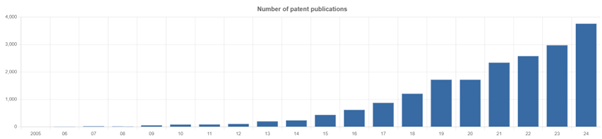
Credit: CAS Content Collection (Michael McCoy Chemical & Engineering News, May27, 2025: “Eye on Patents: Powering EVs and capturing CO2 with metal-organic frameworks”)

Laureates are patent-conscious

Considering the steep rise of patent applications relating to MOFs, it is evident that this field attracts a lot of interest, both in academia and industry. The Nobel laureates themselves also have their research work protected by several patents.

Omar M. Yaghi (together with fellow inventors) has a patent relating to a moisture harvester containing a MOF as water capturing material. This allows liquid water to be collected, also from dry air, e.g. in desert environments. The collected water is suitable for human consumption and can also be used for irrigation of crops. It is easy to envision the impact this invention may have for populations in areas where water supply is scarce.
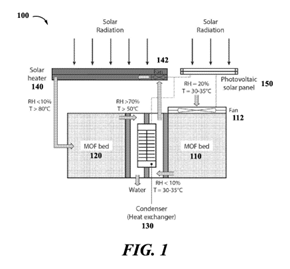
(Figure 1 from EP 3837399 B1 – representative patent family member)

Susumu Kitagawa (and fellow inventors) holds a patent relating to a method for separating and storing highly unstable per- and polyfluoroalkyl substances (PFAS), such as tetrafluorethylene, through adsorption to a MOF. PFAS are widely used industrially, and the possibility to separate, store and transport these toxic and hazardous molecules in a safe way is of great value for humans and the environment.
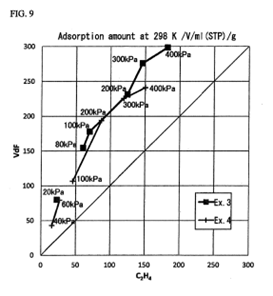
(Figure 9 from EP 3339281 B1 – representative patent family member)

The future is bright

The MOF science is still new, and the broad use and application of MOFs in an industrial scale are yet to be explored. In times of climate change and sustainability challenges, they at least bring a fair amount of hope and expectations to the table.  

The scientific community is excited that the basic research behind MOFs is being awarded the Nobel prize, and Susumu Kitagawa, Richard Robson and Omar M. Yaghi have surely inspired to continued ground-breaking research and innovation. Who would not want to join the solemn Nobel prize ceremony and dinner in beautiful Stockholm?

‍

The Latest Thought Leadership pieces in the Content Hub

The people, physics and patents of the 2025 Nobel prize
December 9, 2025
The 2025 Nobel Prize in Physics recognised John Clarke, Michel H. Devoret, and John M. Martinis for proving macroscopic quantum tunnelling in electric circuits, a breakthrough that enabled quantum computing. Their pioneering research led to hundreds of patents, including innovations in MRI and quantum technology, highlighting the real-world impact of their discoveries.
Stay in the Know

The Patent Strategist

Get expert insights and the top patent stories delivered straight to your inbox.

Heading
This is some text inside of a div block.

Latest Insights

Showing 0 of 100
Quantum IP Strategy: Own control Points, Not Patent Counts
14 October 2026
In quantum, the strongest portfolios will not be the biggest. Stuart Malcolm sets out six moves for owning the control points the market cannot route around, and the questions investors will ask.
#
Consulting
​
Targeted, Not Transformative: The UKIPO’s Considered Course on SEPs
13 October 2026
Andrew Sharples analyses the UKIPO's response to its SEP consultation, exploring proposed changes to FRAND dispute resolution, SEP transparency and licensing guidance, and what they mean for SEP holders and implementers.
#
Consulting
​
Chinese Companies in European Patent Litigation
30 September 2026
Chinese companies are becoming increasingly active in European patent litigation, both as defendants and as patent owners enforcing their own rights. This article examines the growing role of Europe and the Unified Patent Court (UPC) in global patent disputes, highlighting key cases involving Chinese businesses and the strategic opportunities and risks that come with operating in European markets. It is the first in a series exploring the practical implications of European patent enforcement for Chinese companies.
#
Patenting
​
How to mitigate prior art traps for follow-on pharma patents
27 August 2026
Follow-on patents are increasingly important for pharmaceutical innovators. Learn how new EMA clinical trial disclosure rules create prior art risks and discover practical strategies to protect pharmaceutical IP and maximise patent value.
#
Consulting
​
Chinese companies and the UPC: from enforcement targets to strategic users
13 August 2026
Chinese companies are playing an increasingly significant role in UPC litigation, accounting for around 38% of infringement actions in 2025. While many remain defendants, a growing number are actively using the Unified Patent Court to enforce their own patent rights across Europe. The trend highlights the UPC's rising importance for Chinese businesses operating in sectors such as telecommunications, semiconductors, medical devices and renewable energy, and signals a shift in global patent enforcement strategy.
#
Patenting
​
Evaluating the environmental impact of patent AI.
31 July 2026
AI's environmental impact is rarely out of the headlines, but how does it compare to the benefits it delivers in practice? In this article, Laurence Brown examines the energy use of AI-assisted patent drafting, comparing it with traditional drafting workflows. While measuring AI's true environmental footprint is far from straightforward, the analysis suggests that AI-assisted patent drafting may already be more energy efficient, while delivering significant productivity gains for patent professionals.
#
Patenting
​
UPC appeals after three years: Early indications on appeal success rates
15 July 2026
Three years into the UPC, appeal overturn rates sit at 56% for both substantive and preliminary injunction cases, with Kodak v Fujifilm among the rulings reshaping outcomes on appeal.
#
Litigation
​
The UPC After Three Years: From Experiment to Enforcement Forum
15 July 2026
1,282 cases filed at the UPC in three years: infringement actions have surged while revocation filings stayed flat, easing fears the Court would become a European patent graveyard.
#
Litigation
​
Podcast: Building an AI-Native Law Firm
26 June 2026
On the Technically Legal podcast, EIP partner Laurence Brown discusses how Visser AI is redesigning patent workflows, letting the firm offer fixed fees without trading away speed or quality.
#
Patenting
​
Choosing your SEP battleground: UPC, Germany or UK?
07 June 2026
Choosing the right venue for SEP litigation can significantly influence the outcome of FRAND disputes. This article compares the UPC, German and UK courts, examining their approaches to injunctions, FRAND defences, rate-setting and enforcement. It highlights the strategic advantages of each jurisdiction and explains why many SEP owners are increasingly turning to the UK and UPC as part of their European enforcement strategy.
#
Litigation
​
Synthetic Lethality & AI: IP Strategy in Oncology
26 May 2026
This article explores the resurgence of synthetic lethality in precision oncology, highlighting how AI and machine learning are accelerating the discovery of new therapeutic targets. It also examines growing clinical activity, investment, and the evolving intellectual property challenges shaping this emerging field.
#
Consulting
​
Inside the Visser AI Launch Party
20 May 2026
EIP has officially launched Visser AI®, our hybrid intelligence service for patent drafting and prosecution. Watch the launch film from our event at The Boundary in Shoreditch, and discover how our team of European and US patent attorneys — working with the Patently AI platform , delivers faster, lower-cost work at the EPO, USPTO and beyond.
#
Consulting
​
Protecting Your Startup: Five Intellectual Property Mistakes to Avoid
20 May 2026
Early‑stage startups often focus on product development and fundraising, but overlooking intellectual property (IP) can seriously damage long‑term value. This article explores five common IP mistakes startups make, with a particular focus on patents. It covers the risks of filing patents without professional advice, making public disclosures too early, failing to put enforceable contracts in place with third parties, misunderstanding what patent rights actually provide, and neglecting to develop a clear IP strategy. By highlighting these pitfalls and offering practical guidance, the article helps startups protect their innovations, strengthen their commercial position, and improve their prospects with investors.
#
Consulting
​
Technology, Patents, and Sport
13 May 2026
VAR, goal-line tech, AI 3D player avatars, wearable trackers, the technology reshaping the 2026 World Cup and elite sport rests on a patent system that makes the R&D investment behind it worth taking.
#
Patenting
​
Patents or Trade Secrets? When to Patent in Deep Tech Innovation
11 May 2026
Deep tech companies face unique IP challenges due to long development cycles, high upfront investment, and complex technologies that combine products and processes. This article explores when patents, trade secrets, or a combination of both offer the strongest protection. It explains how factors such as detectability, reverse engineering risk, disclosure to third parties, and employee mobility should shape IP strategy decisions. While patents are often best suited to externally visible or licensable technologies, trade secrets can be highly effective for internal processes and know‑how that deliver performance or cost advantages.
#
Patenting
​