Research underlying Nobel prize in chemistry has sparked innovation and patent filings
​
December 2, 2025

Imagine a material that can capture water vapour from desert air during the night and then release water when the sun rises – this sounds like science fiction but has become a reality by the research made by Susumu Kitagawa, Richard Robson and Omar M. Yaghi, awarded the Nobel prize in Chemistry 2025.

This year’s laureates have created a new type of molecular entities, metal-organic frameworks, MOFs, with enormous potential. Besides water harvesting, future application areas include e.g. gas storage, water purification, carbon dioxide capture, and battery technology. The number of patent publications relating to MOFs has risen from close to zero in 2005 to near 4,000 in 2024.

MOFs – soon a term on everyone’s lips

Metal-organic frameworks, MOFs, are materials in which metal ions (or clusters) are connected by organic linkers to create a 3D network containing a vast number of well-defined cavities. The cavities can act as reservoirs for guest molecules that can enter and exit from the surrounding environment. The seemingly endless combinations of the building blocks (metal and linker) allow precise tailoring of MOF properties, such as cavity size and chemical functionality, to suit specific applications.
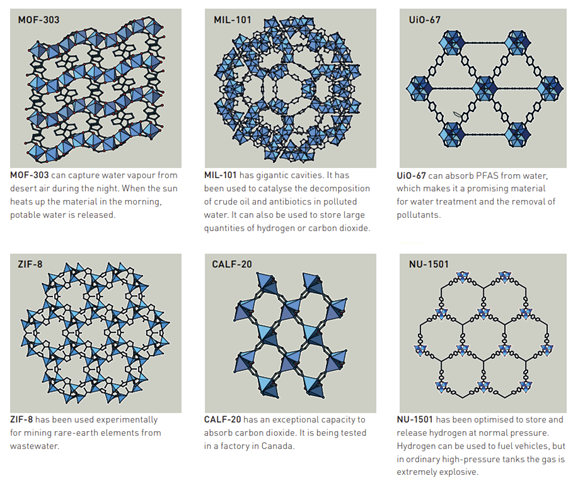
Source: © Johan Jarnestad/The Royal Swedish Academy of Sciences

MOFs are highly porous materials with exceptionally large internal surface areas. One gram of a MOF could have an internal surface area as big as a football field! This makes MOFs better adsorbents than previously known porous materials, such as zeolites or activated carbon.

MOFs are innovation drivers

The MOF technology has paved the way for a flood of innovations in various industrial sectors, such as e.g., chemical industry, healthcare & pharmaceuticals, energy, and environmental remediation.

The vast innovative activity is mirrored by the steep increase in patent filings in the MOF field. China shows the highest patent filing activity, followed by the US and South Korea. A large part of the patent application filings stem from universities, but also major companies like BASF and ExxonMobile can be found among the top filers.
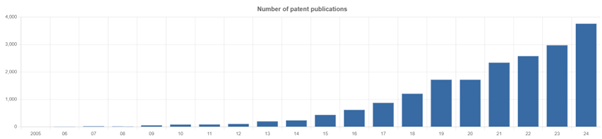
Credit: CAS Content Collection (Michael McCoy Chemical & Engineering News, May27, 2025: “Eye on Patents: Powering EVs and capturing CO2 with metal-organic frameworks”)

Laureates are patent-conscious

Considering the steep rise of patent applications relating to MOFs, it is evident that this field attracts a lot of interest, both in academia and industry. The Nobel laureates themselves also have their research work protected by several patents.

Omar M. Yaghi (together with fellow inventors) has a patent relating to a moisture harvester containing a MOF as water capturing material. This allows liquid water to be collected, also from dry air, e.g. in desert environments. The collected water is suitable for human consumption and can also be used for irrigation of crops. It is easy to envision the impact this invention may have for populations in areas where water supply is scarce.
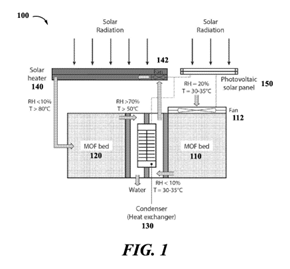
(Figure 1 from EP 3837399 B1 – representative patent family member)

Susumu Kitagawa (and fellow inventors) holds a patent relating to a method for separating and storing highly unstable per- and polyfluoroalkyl substances (PFAS), such as tetrafluorethylene, through adsorption to a MOF. PFAS are widely used industrially, and the possibility to separate, store and transport these toxic and hazardous molecules in a safe way is of great value for humans and the environment.
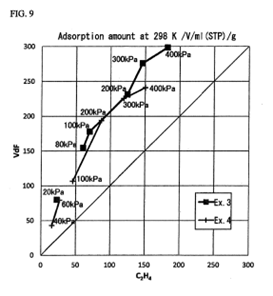
(Figure 9 from EP 3339281 B1 – representative patent family member)

The future is bright

The MOF science is still new, and the broad use and application of MOFs in an industrial scale are yet to be explored. In times of climate change and sustainability challenges, they at least bring a fair amount of hope and expectations to the table.  

The scientific community is excited that the basic research behind MOFs is being awarded the Nobel prize, and Susumu Kitagawa, Richard Robson and Omar M. Yaghi have surely inspired to continued ground-breaking research and innovation. Who would not want to join the solemn Nobel prize ceremony and dinner in beautiful Stockholm?

‍

The Latest Thought Leadership pieces in the Content Hub

The people, physics and patents of the 2025 Nobel prize
December 9, 2025
The 2025 Nobel Prize in Physics recognised John Clarke, Michel H. Devoret, and John M. Martinis for proving macroscopic quantum tunnelling in electric circuits, a breakthrough that enabled quantum computing. Their pioneering research led to hundreds of patents, including innovations in MRI and quantum technology, highlighting the real-world impact of their discoveries.
Stay in the Know

The Patent Strategist

Get expert insights and the top patent stories delivered straight to your inbox.

Heading
This is some text inside of a div block.

Latest Insights

Showing 0 of 100
Is Your AI Conversation Privileged?
08 May 2026
Recent US court decisions have, for the first time, tested whether conversations with AI tools can be protected by legal privilege. In United States v. Heppner, a court held that documents generated by a defendant using a public AI platform were not protected by attorney‑client privilege, largely because the AI was not used within a lawyer‑directed relationship and the platform’s terms allowed data retention and disclosure. By contrast, in Warner v. Gilbarco, another court found that AI‑assisted materials created by a self‑represented litigant were protected under the work‑product doctrine, which has a more forgiving standard for waiver.
#
Consulting
​
The evolution of nucleic acid sequencing and what it means for Genomics and IP
27 April 2026
This article outlines the evolution of nucleic acid sequencing, from early Sanger methods to next‑generation and long‑read technologies. The journey from deciphering individual DNA strands to sequencing entire genomes in hours represents one of biotechnology's most impressive transformations. The first human genome, completed through the Human Genome Project, took around 13 years to sequence and cost billions of dollars, whereas modern sequencing methods can now deliver a genome in hours for a few hundred dollars. For those interested in patents and life sciences, understanding the technical evolution of sequencing methods offers insights into how fundamental scientific advances translate into valuable patent portfolios.
#
Consulting
​
World IP Day: The big ideas shaping IP's fastest-moving fields
24 April 2026
For World IP Day, we asked experts of EIP’s five growth areas: Uniphy, Ampliphy, Stratiphy, Codiphy and Quantiphy, to share a quick insight on innovation, IP trends, and what excites them about the future. Each responded to a single, focused question reflecting the role their team plays across EIP.
#
Consulting
​
Meet the EIP team heading to INTA 2026 in London
23 April 2026
INTA's Annual Meeting is coming to London. From 2–6 May 2026, the ExCeL will host more than 10,000 trade mark and IP professionals from over 100 jurisdictions — five days of sessions, side events, and the kind of corridor conversations that turn into lasting working relationships.
#
Litigation
​
Antibody Patent Protection in Europe and the US: Navigating EPO and USPTO Differences
16 April 2026
This article explores the complexities of patenting antibody therapies, focusing on the differing requirements and practices of the European Patent Office (EPO) and the United States Patent and Trademark Office (USPTO). It highlights how the scope of claims, inventiveness standards, and supporting data requirements vary between jurisdictions, and explains why a tailored IP strategy is essential for innovators especially SMEs seeking protection in both Europe and the US. The article also outlines how EIP’s transatlantic teams collaborate to optimise patent applications for success in these key markets.
#
Patenting
​
Why competitor patent monitoring is critical to your drug development strategy
15 April 2026
This article explains why competitor IP monitoring is a critical part of an effective drug development strategy. By tracking competitor patent activity, companies can assess freedom to operate, identify risks and opportunities early, and make informed decisions on patent filings, licensing, and investment readiness. Ongoing monitoring also supports FTO analysis, third‑party observations, oppositions, and litigation strategy, helping life sciences businesses protect value and reduce risk throughout development.
#
Consulting
​
Biopharma Strategy in 2026: Lessons from 2025 on AI, M&A and the UPC
13 April 2026
This article looks back on a selection of key trends in the (bio)pharma industry in 2025 and looks ahead to how these may continue to develop into 2026.
#
Consulting
​
Thinking about IP from day one: strategic considerations for deep tech startups
08 April 2026
For deep tech startups, intellectual property decisions often come too late or cost too much too soon. This article explores why IP strategy should be considered from day one, even if formal protection comes later. It outlines how founders can decide what to patent, when trade secrets may be more appropriate, and how detectability, enforceability and cost should shape early choices. With a focus on practicality and commercial alignment, it also looks at how newer, AI‑assisted approaches can help startups take a more cost‑effective and flexible approach to building meaningful IP protection.
#
Consulting
​
National offices report increases in national patent applications throughout Europe: Is the EPO no longer “killing” the national offices?
27 March 2026
National patent offices across Europe have reported a marked increase in patent filings in 2025, breaking with a long‑standing downward trend. Data from Germany, France, Italy, Sweden, Austria, Spain and Norway point to growing activity driven by digital technologies, electrification and increased university participation. At the same time, offices report a rise in self‑drafted and AI‑assisted applications, which may lower barriers to entry but also raise concerns about application quality and examination efficiency.
#
Patenting
​
Make your bio(pharma) IP investment ready
22 March 2026
This recap of our LinkedIn Live series focuses on helping (bio)pharma businesses make their IP investment‑ready. Across three sessions, experts will discuss building resilient IP portfolios, making strategic IP decisions ahead of funding rounds, and what the evolving 2026 (bio)pharma landscape means for long‑term IP strategy.
#
Patenting
​
Are professional guidelines making Patent Attorneys too cautious on AI?
19 February 2026
As AI use accelerates in patent practice, many European patent attorneys remain cautious due to professional AI guidelines from the epi. This article argues those guidelines are not a barrier, but a baseline for responsible use.
#
Patenting
​
Provisional Agreement Reached on the EU Pharma Package: Takeaways for Pharmaceutical Companies
17 February 2026
The EU’s new Pharma Package will overhaul regulatory exclusivity, orphan drug incentives, antimicrobial innovation, and generic entry pathways, reducing standard protection periods while introducing new rewards like transferable exclusivity vouchers.
#
Patenting
​
Beyond CRISPR: Precision to Platform
23 January 2026
Gene editing is entering a new phase, moving beyond CRISPR-Cas9’s breakthrough but costly, bespoke therapies toward more precise and scalable platforms. While CRISPR-based treatments like Casgevy have proven clinical success, they remain expensive and entangled in ongoing patent disputes over foundational IP. Next-generation tools such as base editing and prime editing avoid double-strand DNA breaks, enabling more accurate corrections and broader therapeutic potential. The field’s focus is now shifting to disease-agnostic platforms that can be adapted across many conditions, improving access and efficiency.
#
Patenting
​
Confidentiality at the UPC: What litigants need to know
21 January 2026
This article explains how the Unified Patent Court approaches confidentiality in litigation, outlining the procedures for restricting access to sensitive information, how confidentiality clubs are formed, and when hearings may be held in private. It highlights key case law shaping these rules, the balance between fair trial rights and protection of commercial data, and the penalties for breaches. Practical guidance is provided to help parties navigate applications, manage confidential documents, and understand what to expect throughout UPC proceedings.
#
Litigation
​
EPO fees are going up in April 2026: Plan ahead now
19 January 2026
The European Patent Office will introduce a fee increase of roughly 5% from 1 April 2026, affecting search, examination, designation and renewal fees. Filing, excess page, opposition and appeal fees remain unchanged. Some costs—such as renewal fees—can be paid up to three months early, allowing applicants to secure the current lower rates. EIP recommends reviewing your portfolio ahead of the deadline.
#
Patenting
​